Governance & Metrics (Draft)
Governance Built for Trust
Transparency, accountability, and rapid decision-making. As an independent, non-governmental organization modeled after ISO, TIA, and IEC, our governance structure ensures all stakeholders have a voice while maintaining the agility needed for effective action.
Note: This is an exemplar draft to demonstrate the concept. The governance structure and metrics framework will be officially formulated through community input.
How We’re Organized
Internal Structure

External Stakeholders

Funding Allocation

Funding decisions are based on transparent metrics: usage statistics, academic citations, community health, and innovation potential.
Key Principles
Member Rights
- Voting rights in governance decisions
- Representation on technical committees
- Access to shared resources and services
Member Responsibilities
- Financial contributions based on research volume
- Participation in standards development
- Community engagement and support
Evidence-Based Funding
Every funding decision backed by transparent, verifiable data. Our multi-dimensional metrics framework ensures resources reach the tools researchers actually depend on.
How We Measure Impact
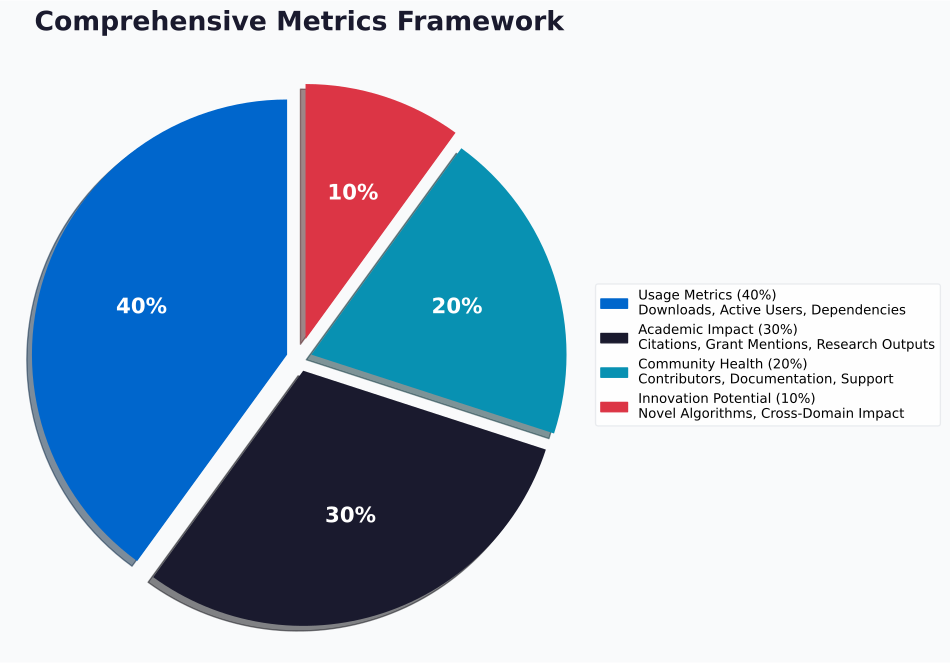
Our weighted scoring system balances breadth of adoption with depth of impact, ensuring both widely-used tools and specialized critical infrastructure receive appropriate support.
Data Collection Principles
Privacy-First
Aggregated and anonymized metrics. User consent for any individual data. Clear opt-out mechanisms.
Automated
Package manager APIs, academic database crawling, repository analytics. Minimal burden on maintainers.
Transparent
Public dashboard showing real-time funding allocation, impact metrics, and complete audit trail.
Verifiable
All metrics independently auditable. Methodology published. Regular third-party reviews.
Success Indicators
For Software
- Reduced bugs and security vulnerabilities
- Improved stability and performance
- Faster issue resolution
For Research
- Increased reproducibility
- Less time on technical troubleshooting
- Enhanced cross-institution collaboration
For Maintainers
- Stable employment and career paths
- Professional recognition
- Reduced burnout
Our Commitment to You
Transparency
All decisions, metrics, and financial information are publicly available.
Accountability
Democratic processes and independent oversight ensure community trust.
Efficiency
Streamlined processes enable quick decisions without sacrificing quality.
Impact
Every decision maximizes positive impact on research software sustainability.