Our Solution
A small percentage of grant funding can solve the research software sustainability crisis.
The Transformation
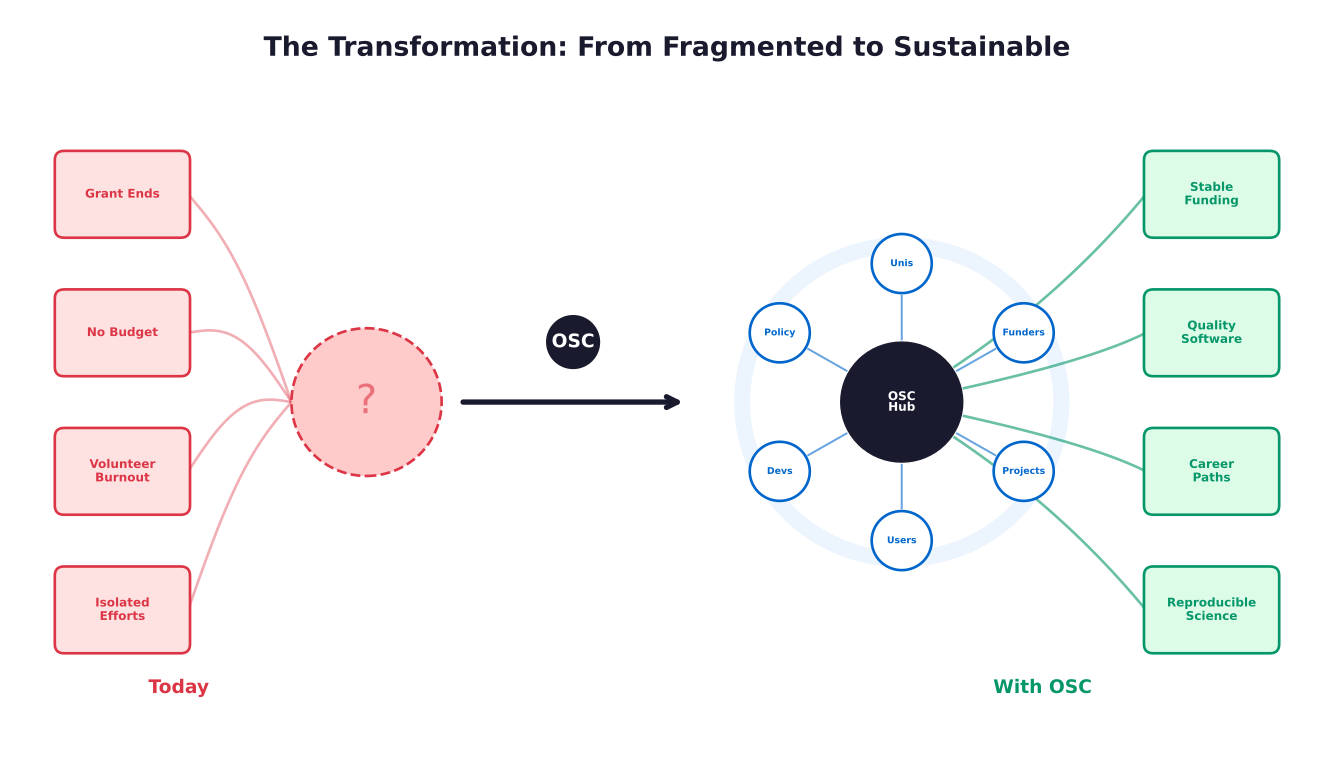
Research software today faces a crisis: grants end, maintainers burn out, critical tools get abandoned. OSC creates the connective tissue that transforms isolated efforts into a sustainable ecosystem.
How It Works
Collect
~0.1% from research grants
Track
Measure software usage and impact
Fund
Direct resources to maintenance
The Math
- Typical grant: $500,000
- Our contribution: $500 (0.1%)
- Impact: Sustainable funding for critical research tools
The U.S. research budget is approximately $180B. Appropriating 0.1% ($180M) would fund maintenance of software researchers use across all disciplines. Even considering only non-defense research (~$100B), this would fund most open-science tools, equivalent to hiring ~400 full-time software engineers.
With other countries joining the effort, we can build a sustainable global funding model for open-science maintenance.
The Ecosystem
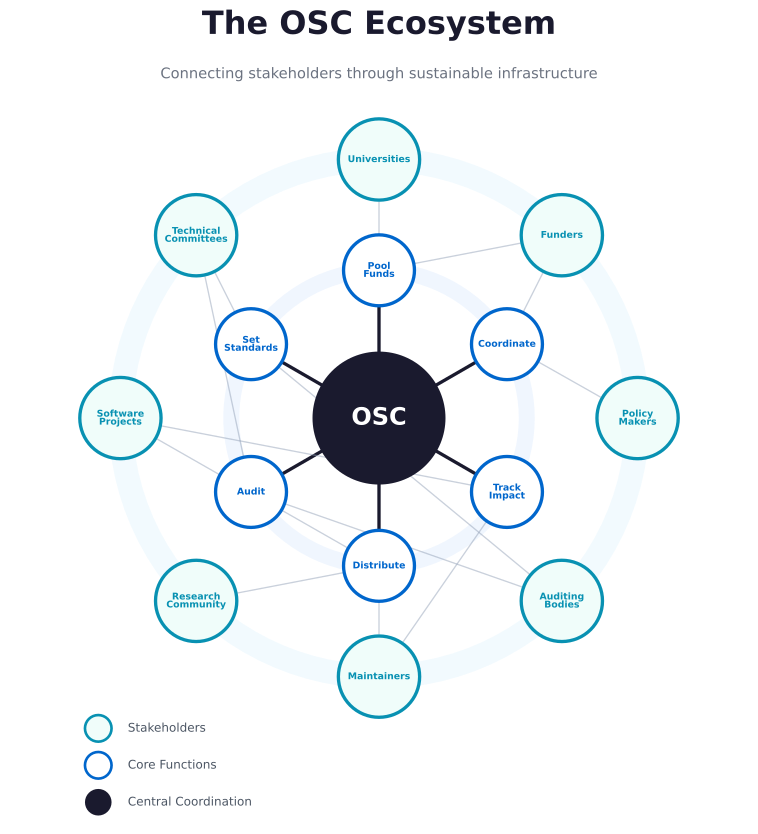
At the center, OSC coordinates funding, standards, and quality assurance. Around it, all stakeholders, including universities, funders, maintainers, and researchers, connect and benefit.
Four Key Principles
Maintenance First
Fund the essential work of keeping software running, secure, and compatible.
Usage-Based
Resources go to tools researchers actually use, measured through downloads, citations, and grant mentions.
Shared Services
Pool resources for documentation, security, testing, and community management.
Innovation Support
Competitive grants drive new tool development while maintenance gets guaranteed funding.
Organizational Structure
The OSC operates as an independent, non-governmental organization modeled after established international bodies like ISO or IEC, but specifically designed for research software sustainability.
Membership-Based Governance
Institutional Members
Universities and research institutions with OSPOs become voting members, contributing funding and participating in strategic decisions.
Technical Committees
Domain experts from member institutions form committees to evaluate projects, set standards, and ensure quality across disciplines.
Auditing Bodies
Independent oversight committees provide transparency and accountability through regular audits and performance reviews.
Rapid Response
Streamlined processes enable quick funding decisions and support delivery without bureaucratic delays.
Implementation Plan
Phase 1: Pilot Programs
- Partner with 3-5 universities with established OSPOs
- Test with ~50 research grants
- Refine metrics and processes
Phase 2: Expansion
- Expand to 20+ institutions
- Integrate with major funding agencies
- Develop international partnerships
Phase 3: Scale
- National and international adoption
- Self-sustaining ecosystem
- Standard practice for research grants
Benefits for Everyone
Researchers
- More reliable, better-documented tools
- Less time troubleshooting, more time on science
- Reproducible research with stable software
Universities
- Competitive advantage with better infrastructure
- Recognition for software contributions
- Reduced risk of research disruption
Funding Agencies
- Greater return on investment
- Reduced duplication across grants
- Measurable software impact
Software Maintainers
- Stable careers with predictable funding
- Professional recognition for maintenance
- Shared resources and community
Ready to Transform Research Software?
0.1% of grant funding = sustainable research infrastructure